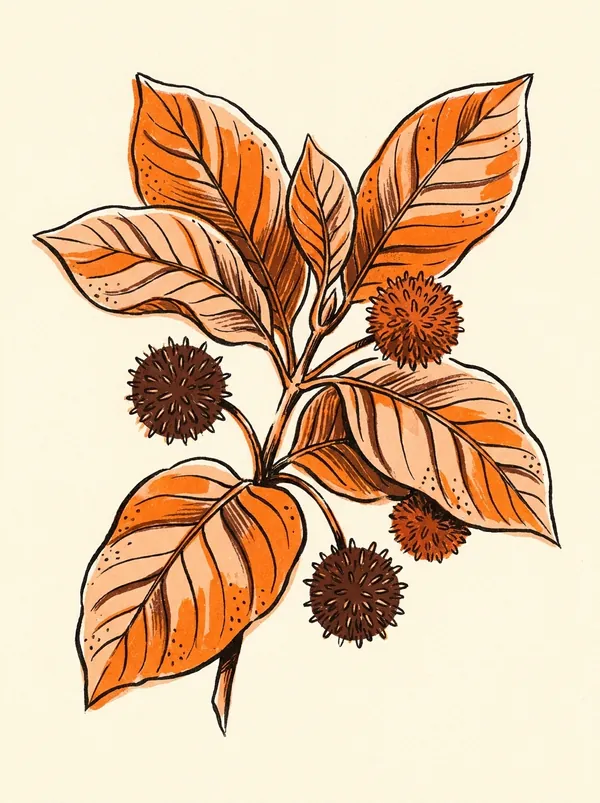
Cat’s claw gets mentioned next to kratom a lot lately, mostly because they share a plant family. Family is a big tent, though: coffee is in it too. The genus is different, the part used is different, and the main alkaloids belong to different classes. There’s one small overlap in the chemistry, which I flagged below.
Side by side
| Feature | Cat’s claw | Kratom |
|---|---|---|
| Latin name | Uncaria tomentosa (sometimes Uncaria guianensis) | Mitragyna speciosa |
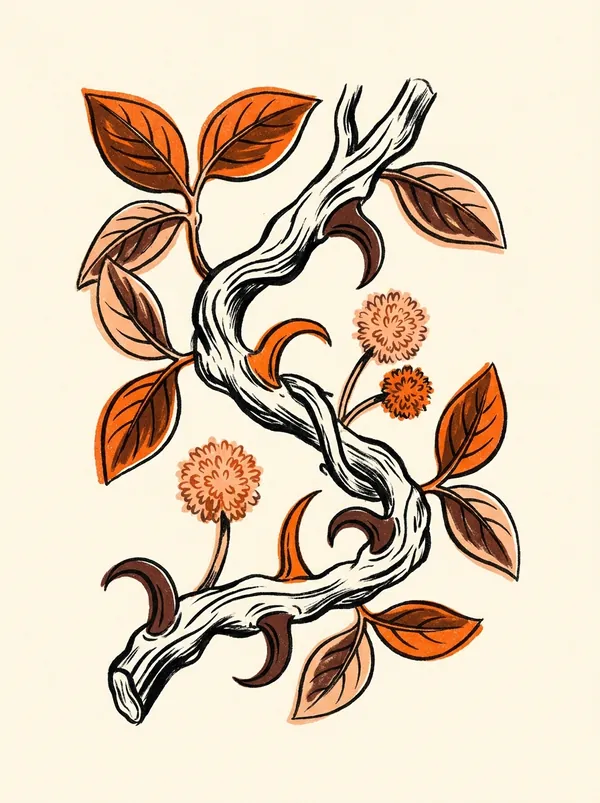
| Plant family / what it is | Rubiaceae (coffee family), genus Uncaria; a woody climbing vine | Rubiaceae (coffee family), genus Mitragyna; a tropical tree |
| Where it grows | Amazon rainforest and other tropical Central and South America | Thailand, Malaysia, Indonesia, Papua New Guinea |
| Part used | Inner bark, sometimes root | Leaf |
| Main compounds researchers study | Oxindole alkaloids: mitraphylline, isomitraphylline, rhynchophylline and others | Indole alkaloids, mainly mitragynine; 7-OH in trace amounts |
| Chemistry overlap | Mitraphylline is one of its main alkaloids | Mitraphylline has also been detected in kratom leaf (2025 study) |
| Common forms sold | Tea-cut bark, capsules, extracts, chewable tablets | Leaf powder, capsules, liquid extracts, shots |
| How it’s usually taken | Bark brewed as tea by Amazonian peoples, including the Asháninka of Peru | Fresh leaves traditionally chewed or brewed as tea in Southeast Asia |
| Legal status in the US (Nov 2026) | Sold as a dietary supplement; not a controlled substance | Not federally scheduled; banned in 11 states |
| What to check on the label | Species named, inner bark, extract ratio or alkaloid %, batch COA | Whether it’s legal in your state; COA listing mitragynine and 7-OH |
Which one fits what you’re after
If you care about
a botanical sold as a dietary supplement
→ Cat’s claw
Covered by NCCIH; not a controlled substance in the US
If you care about
a long rainforest tea tradition
→ Cat’s claw
Amazonian peoples have brewed the bark for generations
If you care about
the plant at the center of today’s law changes
→ Kratom
State bans and federal proposals keep moving; check your state
What I check on the label
- Latin name on the panel: Uncaria tomentosa or Uncaria guianensis, not just “cat’s claw.”
- Plant part: inner bark (or root). Leaves aren’t the traditional part.
- Extract ratio or a stated alkaloid %, and each extract’s amount if it’s a blend.
- NCCIH suggests asking a doctor first if you have an autoimmune condition or take blood thinners or blood-pressure medicine.
Is it legal where you live? Rules for kratom and 7-OH change by state and city. Check the state-by-state map on 7-OH Laws →
Common questions
Is cat’s claw the same as kratom?
No. Both are coffee-family plants, but cat’s claw is Uncaria tomentosa and kratom is Mitragyna speciosa: different genus, different part, different main alkaloids.
Does cat’s claw contain 7-OH?
It isn’t a known source of 7-OH or mitragynine; its main alkaloids are oxindoles such as mitraphylline. A batch COA is how you confirm what’s in a specific product.
Is cat’s claw legal?
Yes. In the US cat’s claw is sold as a dietary supplement and is not a controlled substance.
Why are cat’s claw and kratom compared?
They share a plant family and both are alkaloid-rich, so they get grouped together. Their legal status is very different.
Sources (6)
— Dan
Updated by Dan Mercer.