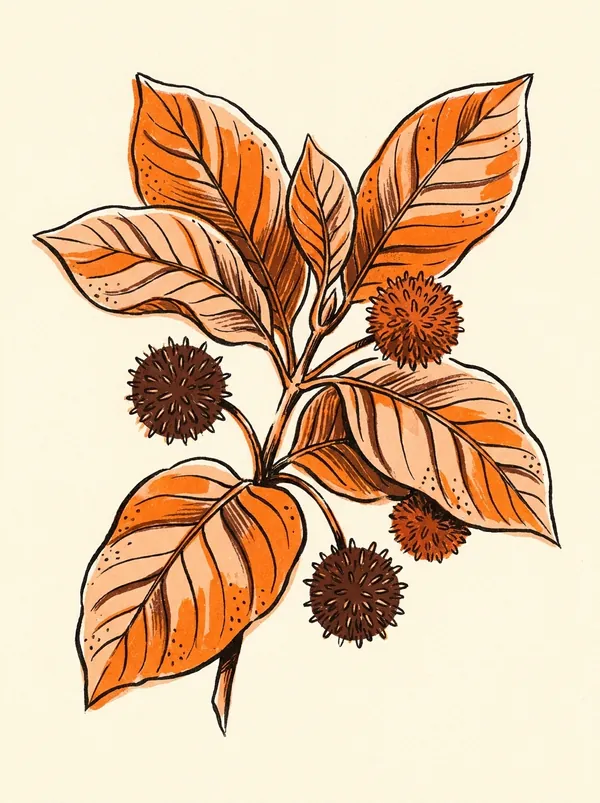
This is the comparison I get asked about most, and it tripped me up at first. The names get used interchangeably. One is a plant. The other is a single compound that many products now sell on its own, at levels the leaf doesn’t reach naturally. The rules are moving fast, so I kept the legal lines short and linked to the details.
Side by side
| Feature | 7-OH | Kratom |
|---|---|---|
| Latin / chemical name | 7-hydroxymitragynine | Mitragyna speciosa |
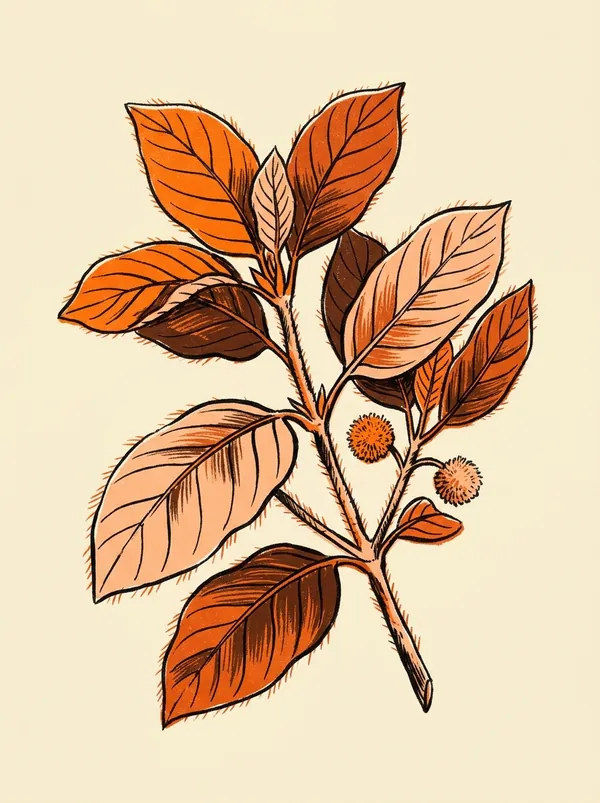
| What it is | One alkaloid, not a plant | The leaf of a tropical tree in the coffee family (Rubiaceae) |
| Where it comes from | Trace amounts in kratom leaf; most products are concentrated or semi-synthetic | Thailand, Malaysia, Indonesia and Papua New Guinea |
| Part used | None: it’s an isolated or converted compound | Leaf |
| Main compounds researchers study | 7-OH itself, studied for its activity at opioid receptors | Mitragynine, the most abundant alkaloid, plus 7-OH and other minor alkaloids |
| Common forms sold | Tablets, gummies, drink mixes and shots (as listed by the FDA) | Leaf powder, capsules, liquid extracts, shots |
| How it’s usually taken | No traditional form; it’s a recent product category | In Southeast Asia, fresh leaves were traditionally chewed or brewed as tea |
| Federal status | Not yet scheduled; FDA recommended scheduling in July 2025, and DEA proposed control above a threshold in Oct 2026 | Not federally scheduled; the FDA says it can’t be sold as a dietary supplement or food ingredient |
| Legal status in the US (Nov 2026) | Banned in 16 states and DC; many others set age limits or caps | Banned in 11 states; many others set age limits or product rules |
| What to check on the label | First, whether it’s legal where you are; then the 7-OH amount and a batch COA | Latin name, and a batch COA listing mitragynine and 7-OH |
Which one fits what you’re after
If you care about
understanding the plant itself
→ Kratom
Kratom is the whole leaf; 7-OH is one compound from it
If you care about
where regulators are focused
→ 7-OH
The FDA said in July 2025 it is not focused on natural kratom leaf products
If you care about
the legal risk where you live
→ Both: check first
7-OH is banned in more places than kratom, and both lists keep changing
What I check on the label
- Does a “kratom” product list 7-OH as its own ingredient? That makes it a different product.
- Is the 7-OH amount per unit stated, and does a batch COA confirm it?
- For leaf products: is the Latin name Mitragyna speciosa, and does the COA list mitragynine and 7-OH?
- First: is it legal in your state this month? 7ohlaws.com keeps a dated list.
Is it legal where you live? Rules for kratom and 7-OH change by state and city. Check the state-by-state map on 7-OH Laws →
Common questions
Is 7-OH the same as kratom?
No. 7-OH is one alkaloid in kratom leaf, present naturally only in trace amounts. Most 7-OH products are concentrated or made by converting other kratom alkaloids.
Is 7-OH legal?
As of Nov 2026 it is not federally scheduled, but the FDA recommended scheduling in July 2025 and the DEA proposed control above a threshold in Oct 2026. It is banned in 16 states and DC; see 7ohlaws.com/7-oh/ for your state.
Which is legal in more states?
Kratom leaf. As of Nov 2026, 7-OH is banned in 16 states and DC and kratom in 11, and many other states regulate both.
Does Poppy sell kratom or 7-OH?
No. Poppy, which supports this notebook, sells neither.
Sources (6)
— Dan
Updated by Dan Mercer.